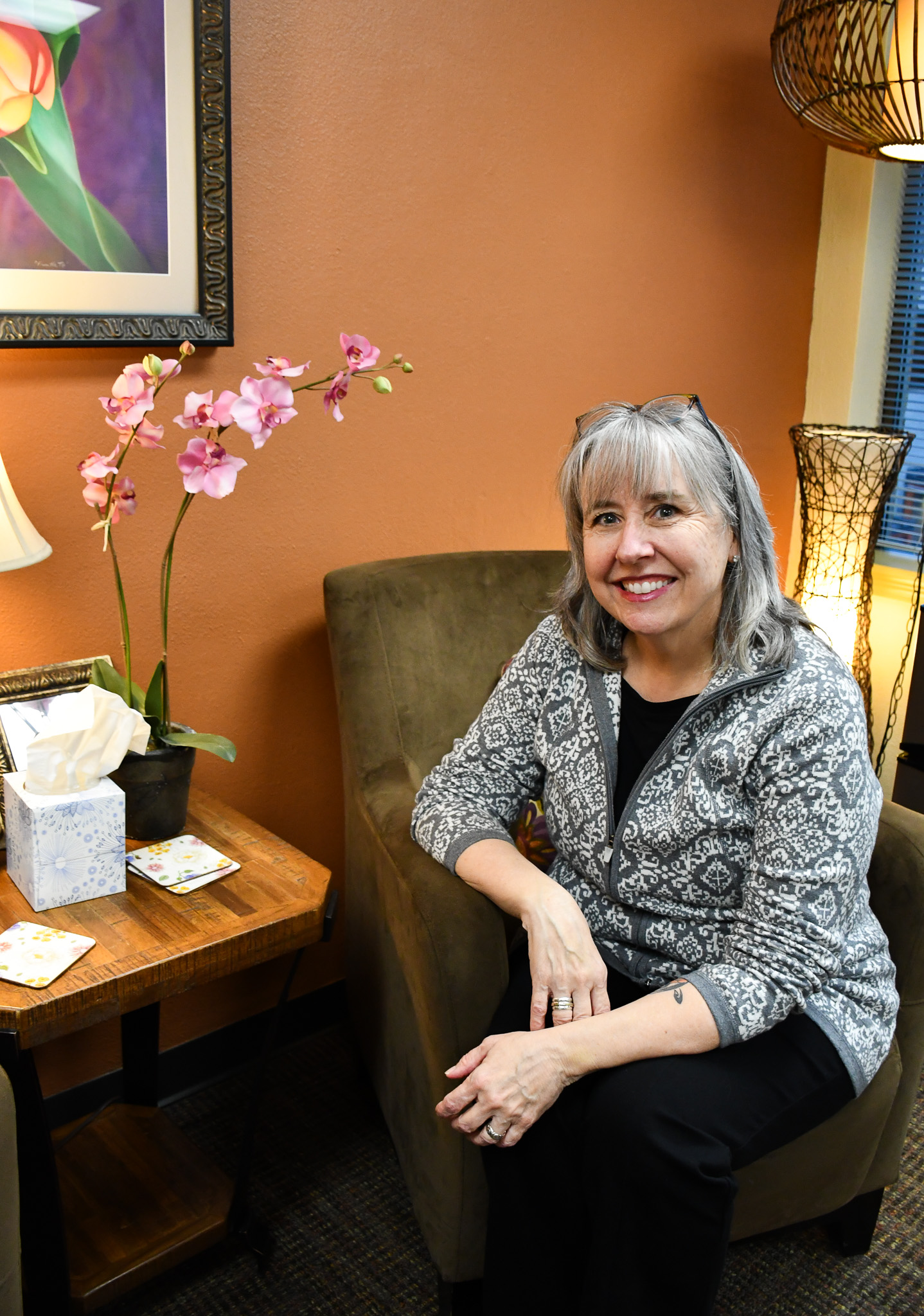
 | | | | | GREETINGS FROM THE ARC OF SPOKANE'S NEW CEO Pamela Norr, CEO I am so honored to be here at The Arc of Spokane as the newest leader of this amazing organization. This team of experts on intellectual and developmental disabilities are compassionate and dedicated. They care so deeply about the community we serve and the mission of inclusive community, every life fulfilled. I am truly inspired and am so excited about taking the organization to the next level so that we can serve as many individuals and their families as possible. I have over 30 years of nonprofit experience – in both very large organizations and very specialized organizations. And I’m happy to tell you more about myself at any time and welcome the opportunity to connect with you. I want to speak from my heart for a moment. I have a 28-year-old son who is autistic and have always felt that we were ‘out there on our own’ in supporting him because we didn’t locate and access such caring services in the past as I see we offer here at The Arc. It is heart-warming to see how we care for our community, and also heart-breaking because I know there are so many others in our region who would love our support. This just motivates me more to raise awareness, acquire more financial support and help our caring team reach out to more people. In addition to my son Marten and his fiancé in my home, I also have my 90-year-old mother, my adult daughter, my husband and several rescue dogs. I love having a multi-generational home with lots of music, joyful noise, lots of meaningful conversations, and of course the occasional challenging and lively discussions over a big family supper. In my life, I aspire to be a compassionate and kind leader, warm hearted and supportive with an eye on running a strong and progressive business, so that we can do as much as humanly possible to support those we serve. I look forward to working together with you in advocacy and support of The Arc community and welcome the opportunity to connect. I look forward to meeting you! | |  | HAPPY HOLIDAYS... ? by Stephanie Sherman-Petersen, Parent Coalition Coordinator “Eat some turkey! You can’t live on just mashed potatoes. That’s not a meal.” “I guess if you don’t like it, I’ll just give your gift to someone more grateful!” “Your cousins flew all the way from Alaska to visit you—be social!” ‘Tis the season, right?! The holidays are often more dreaded than anticipated, as we all try to navigate the expectations of tradition and decorum embedded in holiday celebrations. I’m sure if you are neurodivergent in any way—have sensory processing needs, autism, or attention disorders, to name a few—you’ve heard something a lot like the quotes above during your past holiday get-togethers. What should be a relaxing, celebratory time is often filled with incredible heartache, overstimulation and stress instead. How do we fill the holidays with feelings of love and relaxation rather than expose ourselves to shame and embarrassment? Perhaps some of the ideas gathered below from parents and self-advocates will help you navigate family celebrations with greater joy and less stress. For family and friends: - First, please do a little research about your friend’s disability. This goes a LONG way to increasing your empathy and understanding.
- For gift-giving, worry less about what is “age appropriate” and more about what they like! "My daughter is a teen who is obsessed with the children’s show Bolt. She cried tears of joy at getting yet another exact replica of the same stuffed animal." Another parent shared, "My son had a sophisticated sense of humor at a young age and liked movies aimed at the older generation. At the same time, even now that he is older, he still loves Minecraft." Many adults still collect Pokémon and read children’s literature. Just go with it, and you will make someone feel seen and loved.
- Many neurodivergent folks find that surprises are often unsettling. It is often the exact opposite of fun or magical! A rough schedule for the day or a menu for mealtimes can give a semblance of control in unfamiliar territory.
- Let them open gifts out of the limelight. The anticipation and anxiety around gifts can be overwhelming for us all. Will it be what I hoped? What if it isn’t? How will I handle the emotions? Everyone will be angry with me if I don’t act like I love it, and it feels dishonest to put on a smile. The performance anxiety is real. Opening gifts in private will make everyone a lot more relaxed.
- If you’re hosting, make time for down time. Everyone together, all the time, for every activity or meal, is so much. Welcome people to go for a walk, take a nap, or stim as needed!
Parents: - Bring the proverbial kitchen sink. Bring food and snacks they can palate in case the holiday food causes sensory issues. "I feed my daughter a favorite snack right before the big meal. She won’t be starving and frustrated that the food isn’t familiar," one parent shared. Bring their weighted blanket, their stimming implements, and yes, their electronic devices. "These are tools, not toys, to lots of us," a self-advocate shared.
- Forget the audience and just do your best. Sensory meltdowns seem to really flare up when we are out of routine during the holidays. "When my son is in sensory overload and I’m doing all I can to help him regulate, sometimes it feels like every judgmental eye is laser-focused on me," a parent shared. Parents can feel overloaded as we try to practice the strategies our kiddos have learned in occupational therapy, all the harder in front of an audience. Who knows, though! You could be teaching some observer about how to cope in healthy ways.
Self-advocates: - Cram for the big exam. Try to anticipate the three biggest issues that will come up and practice how to navigate them. You can’t anticipate everything, but it helps. Will it be disapproving looks from uncle when you don’t eat his jiggly cranberries? Will Aunt Mary scoff when I bring a sensory tool to the table? Will another guest’s chewing push you over the edge? “My grandfather’s artificial teeth clacked when he ate. I would hunker over and cover my ears, which always made me look like a jerk. I learned that sitting at the kids’ table worked for me, and I could chat with my nieces instead,” one self-advocate shared.
- See above re: surprises. I recently read about a couple who are both “on the spectrum” (their words). "We tell each other what gifts we want, help each other pick them out, and wrap them up for the big ‘reveal’ on Christmas!" The ceremony of gift giving stays intact for the extended family, but no one is anxious. This could work with your kiddos, too.
- Go ahead and stim. This is a normal coping mechanism unique to you. Let out a long meow, spin your fidget ring, or climb up the stairs backwards—isn’t that satisfying?! “I use the pretense of needing to make an important call in a private room. Really, I just need to rock. You can’t keep masking all day and let all that sensory input pile up without a release,” a self-advocate shared.
To close this list, I have to share about my own favorite sensory-friendly holiday. Like many others during the pandemic, we didn’t welcome out of town guests or travel home for Thanksgiving. Instead, we got together with one set of friends with whom we’d been “distancing together.” We ate dessert first, played cooperative board games, and watched football with the volume on mute. I hope the ideas above bring you and yours the same sense of love, safety, and joy we all felt that year. Happy Holidays! | |  | ELEGANCE IN HUMANITY by Jennifer Oliveri, Director of Advocacy and Family Support Systems: A set of things working together as parts of a mechanism or an interconnecting network. I will be the first to admit this isn’t the most captivating of opening lines. After all, how many of us truly enjoy learning about and creating systems? But as the director of advocacy and family support at The Arc of Spokane, I do think about systems. A lot. I think about how in one way or another we are all dependent on some sort of system, whether it be healthcare, educational, governmental, legal, etc. In advocacy, I often hear about how large systems in Washington, who serve people with IDD, are failing them. They do not appear to be well-designed in function and tend not to be created with the idea of humanity in mind. I have heard hundreds of stories about the broken systems that serve people with IDD and their families. I have felt the anger, I have shouted in frustration, I have celebrated when there is a win, and I have fought alongside those who need advocacy. What would it look like if the largest systems that served people with IDD in Washington state started with two simple and elegant questions: What is best for people with IDD and their families and how do we want them to feel? And recently, I had an experience of my own that opened my eyes even more to changes we need to see within our systems that serve people with IDD and their families. My husband was diagnosed with cancer. It was unexpected and I am thankful we caught it early, but the needed treatment required us to move to Seattle for approximately three months and receive care from Fred Hutchinson Cancer Center. We were scared, we weren’t in our own town, our own home, or surrounded by our friends and family. Time meant nothing there; we didn’t have a routine (except for multiple appointments throughout the day), and each day melted into the next. We were utterly dependent on a system to show us kindness, be experts at what they do, and provide us with what we needed. What we experienced was nothing less than exceptional. It was a system that clearly started with asking: what is best for people with cancer and their loved ones and how do we want them to feel? From there they built an entire system that exuded skill, generosity, and kindness in all they did. I heard a saying once that I never forgot; the most elegant answer is usually the right one. The more workarounds you need to make your system work is probably a sign that it doesn’t. It was clear that those at Fred Hutch had examined every possible thing that people going through cancer, and their loved one or caregiver, may need to feel safe and supported. From the person who immediately greeted us everyday with the biggest smile at the front desk, to offering snacks and beverages when there were waits, to staff who treated us as if they could not wait to see us, to their knowledge and the time they took to explain everything in easy-to-understand language and never rushed us as we processed it all. We had a team of doctors, nurses, pharmacists, a nutritionist, someone for our mental health and another for our spiritual health. Services were holistic and available for the person going through treatment as well as their support person. They treated their co-workers with the same kindness; we saw it in how they interacted with each other with respect and consideration. When we received news that there was a setback in treatment, it was clear both my husband and I were devastated. We just held each other’s hands while we sat in shocked silence as the doctor told us about next steps, but neither of us heard a word. When the doctor left, our nurse told us she took notes for us and then sat in the room with us and took the time to help us process. While we walked away still not loving the news, we felt taken care of and knew the detailed next steps we would need to take. I couldn’t help but wonder about their process of hiring the right people, training employees, ensuring they all truly believed in the values and vision and lived it every day. I imagined they must have talked to people with cancer, their families, and staff on what they thought was meaningful service. It was a master class in human centered design. If we are being honest, we know there are systems that serve people with IDD and their families that have not asked those questions or if they have, somewhere along the lines, they got lost in “process.” It was probably not their intention to make people feel frustrated, lost, or hopeless, although it happens daily. But I would challenge it is not the job of the person with IDD to understand an organizational system. They shouldn’t have to. Take for example our educational system that still allows restraint and isolation and is legally allowed in Washington state. Is that truly best for people with IDD? It has been proven that it is not. How does it make them feel? Less than and scared at best, completely traumatized at worst. The elegant answer is to stop the practice. No excuses, no “yeah, but…” It may not be easy, it would take dismantling the current system and rebuilding it. It would take asking for the voices of those they serve to help create the vision. It would take creativity and humanity. As we go into this legislative season, join me and others as we demand better. Be on the lookout for our posts about Advocacy Days and how you can get involved to share your story. Together, we can be part of the solution in creating a system that works with, and for, those with IDD and their families, loved ones, and caregivers. | |  | WHAT'S IN STORE FOR 2024? THE DOMINO EFFECT! by Taylor Crisp, Spokane County Parent Coalition Self-Advocate With the holidays in full swing, it’s easy to get stressed over financial, emotional, mental and physical burdens. Let’s face it, holiday chaos sometimes leaves us broken, depressed, and/or exhausted. The last thing that comes to mind during this time of year is wondering about what legislative initiatives are coming out in 2024. What if I told you that what happens in legislation does impact your financial health, your mental health, and much more? You might be thinking “Those issues don’t impact my life” or “I don’t have a disability, so this doesn’t apply to me,” when in a way it actually does. Even if you don’t have a disability, you may have a loved one, a friend, a neighbor, or even a co-worker with an IDD. Regardless, there is someone in your community who has a disability and, one way or another, fights barriers that prevent accessing services and support. Maybe you want to get involved in legislative advocacy but you’re not sure where to begin. A great way to start your advocacy journey would be to connect with The Arc of Washington State and their website. This is where you can sign up for need-to-know updates in newsletters as well as sign up to receive action alerts on their website’s homepage. This is also where you can find more information on registration for Advocacy Days! What are Advocacy Days and what’s their purpose? Advocacy Days are a series of weekly meetings hosted by The Arc of Washington State in partnership with other self-advocacy organizations. These are held once a week during the legislative session where self-advocates, their families, and their providers gather together to help promote legislative advocacy as well as policy change. This also creates opportunities for those who are interested in having their voices be heard by legislators across the state to testify and share their stories on their direct lived experiences. What makes Advocacy Days so inclusive is that these meetings are held virtually, this makes it more accessible, so everyone is given the opportunity to attend. The link to read priorities or attend sessions can be found here. I hope this gives you some insight and clarity on how you can be part of an inclusive community that makes meaningful and impactful change! Will you come join us in being a part of making a difference in the IDD community? Everyone is welcome! For more ways to get involved and updated on changes and events in the IDD community, feel free to join our Inland Northwest Disability Action Bloc Facebook Group. Your participation will play a big role! | |  | LEGAL EAGLES by Kate Burke, Legal Services Coordinator Last year, The Arc of Spokane received funding for a study looking into how accessible civil legal services are for individuals with IDD and their families in our community. The findings weren't surprising, but they were alarming – folks with IDD are facing significant barriers to accessing services even though they experience higher levels of discrimination in housing, employment, and healthcare, and are seven times more likely to have experienced sexual abuse. Legal systems have not been created for people with IDD to easily access, leaving a vulnerable population more vulnerable. Being a strong advocate for those frequently overlooked by our society, with individuals with IDD often falling into that category and unfortunately being dismissed, I am deeply committed to creating changes that bring positive impacts to our communities. I knew I wanted to become part of meaningful and systematic change, and I’m currently working as the legal services coordinator at The Arc of Spokane to create better legal partnerships, access, and equity! This position looks at the five key recommendations that were crafted to address gaps and promote a fairer legal support system for these families. - Establish a dedicated position at The Arc to manage an updated list of legal resources and build partnerships with community agencies to extend access to underserved populations.
- Provide assistance and information to individuals seeking appointed counsel and representation in state court and administrative hearings, aiming to raise awareness about available resources and streamline the request process.
- Collaborate with the Access to Justice Board's Washington Legal Mapping Project to track unmet legal needs of individuals with IDD, ensuring ongoing advocacy for appropriate resources.
- Develop new programs specifically tailored to support access to civil legal services for individuals and families with IDD.
- Address the long-term legal service needs of individuals with IDD by establishing targeted legal services with a staff primarily composed of lawyers and advocates.
No other chapter of The Arc has tried to tackle the issue of legal advocacy within the IDD community so holistically, and Spokane is proud to be the first to innovate and collaborate for better systems. The Arc of Spokane has secured initial funding to kickstart the implementation of these recommendations and in just one month has made significant strides. Efforts include: working on a state-level proviso for a legal service pilot program to provide sustainable funding for legal services on the east and west side of the state, and securing partnerships with organizations like the Gonzaga University School of Law, Northwest Justice Project, and The Volunteer Lawyer Program for free legal clinics and workshops. Active participation in a coalition aiming for stable funding for all civil legal agencies in Spokane County is underway, with the ultimate goal of enhancing services for underserved communities. The Arc of Spokane is also actively pursuing grant opportunities to secure additional funding for new partnerships and innovative programs. This initiative will cultivate a stronger and more inclusive community for all, with exciting developments on the horizon – stay tuned for updates! For information on current legal services, please contact advocacy@arc-spokane.org | | | | | Parents may have questions and concerns as they learn about services that can help their child and family and often need time and support to navigate their own emotions and adjust to raising a child with special needs. Personal support from fellow parent can help with: - Emotional support for parents
- Information and referrals to community resources
- Connecting you to Trained Helping Parents
- Social and recreational events
- Current information on disabilities, medical conditions and community resources
- Training for parents who would like to become Volunteer Helping Parents
- Public awareness and outreach to the community regarding individuals with disabilities
Learn more about Parent to Parent resources here. | | | | Find local resources for the help you need! Did you know The Arc of Spokane has a digital resource guide? Click here for information on a variety of different resources! If you want a more comprehensive and personalized list of resources for your specific situation, please contact our Individual Advocacy Team at advocacy@arc-spokane.org or call (509) 789-8327. They will help you untangle complex issues and the service is free. The Individual Advocacy team is ready to help! | | | | | | | | | | The Arc of Spokane
320 E. 2nd Ave. | Spokane, Washington 99202
(509) 328-6326 | info@arc-spokane.org | | | | | | | | | | | |